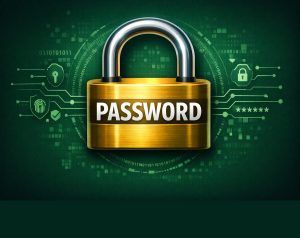
A Password Manager is an essential security tool these days. In a world where almost every aspect of life now lives behind a login screen, the humble password has become both a gateway and a liability. We rely on passwords for banking, shopping, social media, healthcare, cloud storage, and even our front‑door locks. Yet most people still juggle them with a mix of guesswork, repetition, and the occasional sticky note. As a result, it’s no surprise that weak or reused passwords remain one of the biggest causes of data breaches.
Password managers exist to solve this problem elegantly. They take the mental load off the user, enforce good security habits, and, as a result, make logging in easier and safer. If you’ve ever wondered whether you really need one, the short answer is yes. The longer answer is what follows.
The Problem With Human‑Made Passwords
Humans are brilliant at creativity, but terrible at generating secure passwords. We gravitate toward patterns, reuse the same favourites, and simplify things so we don’t forget them. Cybercriminals know this, and they exploit it relentlessly.
Common issues include:
- Password reuse – If one site is breached, attackers try the same password everywhere else.
- Predictability – “Summer2024!” isn’t fooling anyone.
- Incremental updates – Changing “Password1” to “Password2” is not meaningful security.
- Memory overload – The average person has over 100 online accounts. No one can memorise 100 unique, complex passwords.
Password managers eliminate these weaknesses by generating and storing strong, unique passwords for every account you own.
What a Password Manager Actually Does
A password manager is essentially a secure vault. You create one strong master password, and the manager handles everything else:
1. Generates strong, unique passwords
Instead of thinking up your own combinations, the manager creates long, random strings that are virtually impossible to guess or brute‑force.
2. Stores them securely
Your passwords are encrypted locally before they ever sync to the cloud. Even the provider can’t see them.
3. Autofills login details
No more typing, guessing, or resetting forgotten passwords. Your manager fills them in automatically on websites and apps.
4. Syncs across devices
Whether you’re on your phone, laptop, or tablet, your logins are always available.
5. Alerts you to breaches
Many managers monitor the dark web and notify you if one of your accounts is compromised.
6. Encourages better habits
By removing friction, password managers make strong security the default rather than the exception.
Why a Password Manager is Safer Than DIY Methods
Some people hesitate because they worry about “putting all their passwords in one place.” It’s a fair question, but the reality is that password managers are significantly safer than the alternatives.
They use strong encryption
Modern password managers use industry‑standard encryption such as AES‑256. Even if someone stole the encrypted vault, it would be useless without your master password.
They’re designed to resist attacks
Password managers undergo regular security audits, penetration testing, and third‑party reviews. Your notebook, browser autofill, or memory do not.
They reduce phishing risk
Many managers only autofill on legitimate websites. If you land on a fake login page, the manager won’t recognise it—an early warning sign.
They eliminate weak passwords
You never need to reuse or simplify passwords again.
In short, password managers reduce your attack surface dramatically.
The Big Players in the Password Manager Space
There are many password managers available today, but a handful consistently rise to the top due to their features, security track records, and ease of use. Here are some of the most notable:
1. 1Password 
A favourite among businesses and families alike, 1Password is known for its clean interface, strong security model, and excellent cross‑platform support. Features like “Watchtower” help monitor breaches and password health.
2. LastPass 
One of the most recognisable names in the space, LastPass offers a generous free tier and simple setup. While it has experienced security incidents in the past, it remains widely used and continues to evolve its security practices.
3. Bitwarden 
An open‑source option that has gained huge popularity, Bitwarden is transparent, affordable, and highly trusted by the tech community. Its codebase is publicly auditable, which appeals to security‑conscious users.
4. Dashlane 
Dashlane combines password management with identity‑theft monitoring and a built‑in VPN on some plans. It’s polished, user‑friendly, and ideal for people who want an all‑in‑one security suite.
5. Keeper 
Keeper is known for its enterprise‑grade security features, including secure file storage and advanced reporting tools. It’s a strong choice for businesses and power users.
6. Apple iCloud Keychain / Google Password Manager / Microsoft Authenticator
These built‑in options are improving rapidly. They’re convenient, free, and integrated into their respective ecosystems. While they may lack some advanced features, they’re far better than doing nothing.
Choosing the Right Password Manager
The best password manager is the one you’ll actually use. A few things to consider:
- Cross‑platform support – Do you switch between Windows, macOS, Linux, Android, and iOS?
- Ease of use – Some managers are more beginner‑friendly than others.
- Security model – Open‑source vs. proprietary, local vs. cloud sync.
- Extra features – Secure notes, 2FA integration, breach monitoring, family sharing.
- Price – Many offer free tiers; premium plans add convenience and advanced tools.
For most people, Bitwarden or 1Password are excellent starting points. If you’re deep in the Apple ecosystem, iCloud Keychain may be enough.
Password Managers and the Future of Authentication
Password managers are a bridge to a passwordless future. Technologies like passkeys are gaining traction, and many password managers already support them. Until the world fully transitions, though, passwords remain unavoidable—and password managers are the safest way to handle them.
They don’t just protect you from hackers; they also protect you from yourself. They remove the burden of remembering dozens of complex strings, reduce the risk of breaches, and consequently make your digital life smoother.
Final Thoughts
If you’re still managing passwords manually, you’re fighting an uphill battle. Cybersecurity threats are only increasing, and attackers rely on the fact that most people use weak or reused passwords. A password manager flips the script. It gives you stronger security with less effort, and once you start using one, you’ll wonder how you ever lived without it.
For more security-related tips, check out our index page here.